Baking Soda and Drug Tests: Risks and Safety Concerns
A Closer Look At Baking Soda and Drug Testing
Some people search online for ways to change or ‘beat’ a drug test, including using baking soda. This article on baking soda and drug tests explains why that approach is unsafe, why it is not a reliable solution, and what medical and treatment considerations matter most. This page is for educational purposes only and should not replace medical, legal, employment, or probation advice.
We’ll also explain when it may make sense to seek professional support if worries about drug testing are connected to ongoing substance use.
Important: This article is for educational purposes only. It does not provide medical, legal, employment, probation, or drug-testing advice, and it does not recommend methods of altering or attempting to “beat” a drug test. If someone has swallowed a large amount of baking soda and is having concerning symptoms, seek urgent medical care. If the person has collapsed, had a seizure, is having trouble breathing, or cannot be awakened, call 911 immediately. You can also contact Poison Help at 1-800-222-1222 for fast, free, confidential guidance in the United States.
Why Does My Workplace Require Drug Tests?

Drug testing may be used in several settings, including employment, monitoring in some treatment or medical contexts, athletics, and certain legal or probation-related situations. Policies vary by employer, program, and jurisdiction. In workplace settings, testing is often used as part of pre-employment screening, annual physicals, or reasonable-suspicion procedures.
Of course, employers aren’t the only ones who may request a drug test. Drug tests are also used for:
- Participation in sports, whether at a high school, college, or professional level
- Legal purposes, including testing that follows a criminal act
- Medication monitoring, which ensures you are taking medication at a prescribed dose (not more or less)
What are the 5 Most Common Types Of Drug Testing Methods?
Employers might use numerous drug tests to determine whether employees are abusing illegal drugs. Drug tests may use urine, blood, saliva, hair, sweat, or breath, depending on the setting and the substance being tested. Different test types have different detection windows, strengths, and limitations, so results should be interpreted in context
1) Blood drug test

A blood test can be utilized to detect drugs in the body. This drug test will be administered just like any other blood draw you’d experience for other purposes, like checking vitamin or hormone levels.
2) Urine drug test
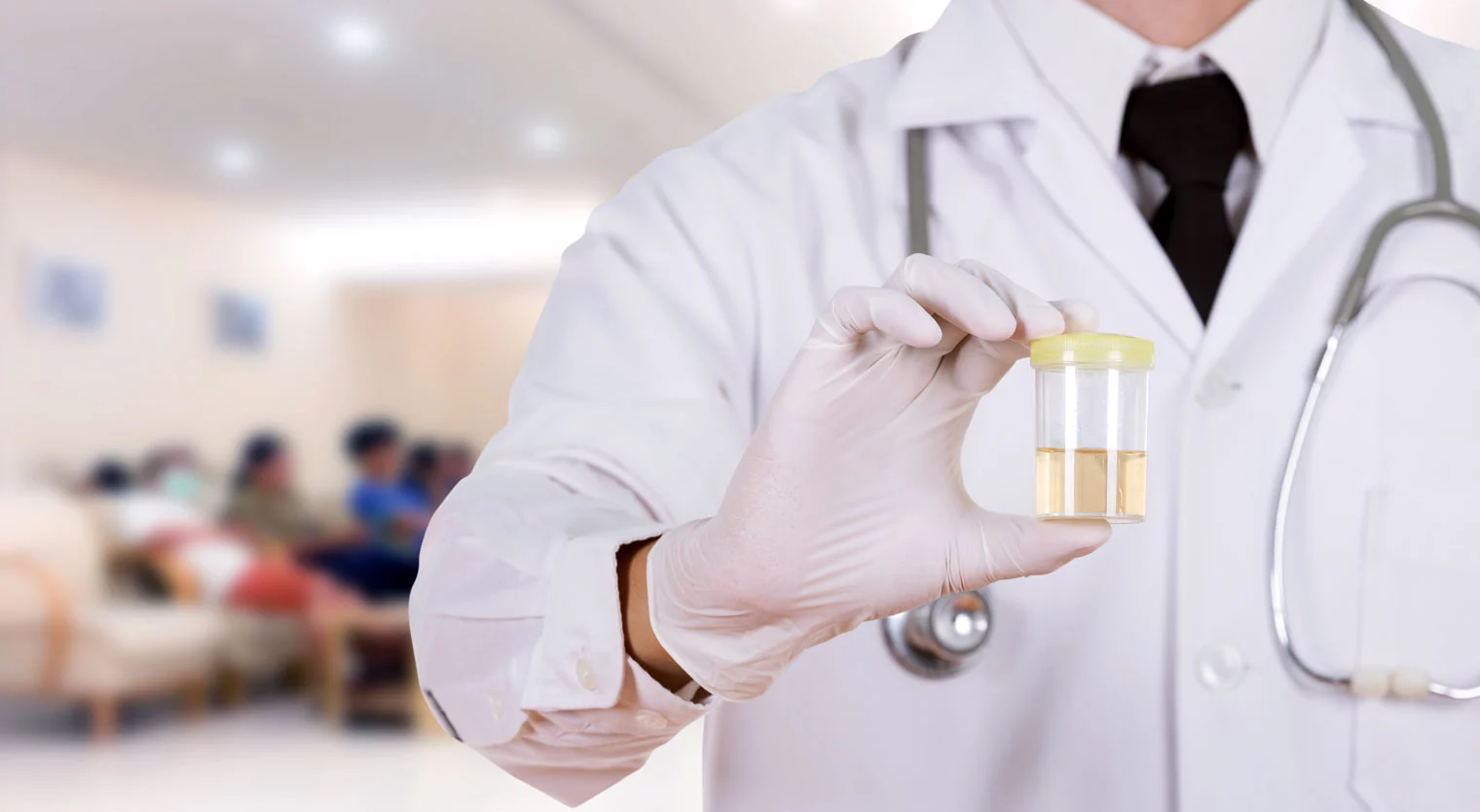
Urine drug tests are among the most common drug tests used by employers and medical professionals. A urine drug test requires a urine sample that you will provide on-site at drug labs by filling a cup to the line with urine.
3) Saliva-based drug test
Similar to a urine drug test, saliva drug tests are brief. During a saliva drug test, testers swab the inside of your mouth directly with a long Q-tip to collect your saliva.
4) Hair follicle drug test
When you engage in drug use, the drug is absorbed into your bloodstream. Then, substances move from your blood to your hair follicles. Hair follicle drug tests detect drugs in the system for a lot longer than other tests, including urine drug tests. During a hair test, the tester collects a small hair sample for analysis.
5) Breathalyzer test
With a breathalyzer test, you breathe into a device to determine the content of alcohol and other drugs in your system. Breath tests are most commonly used to detect alcohol. Other drug-testing methods are more commonly performed with urine, saliva, blood, or hair, depending on the setting.
Will Baking Soda Fool A Drug Test? Dispelling the Myth and Looking at the Reality

Online advice about using baking soda to affect a urine drug test is not a safe or reliable solution. Attempts to alter a specimen can fail and can also trigger specimen-validity concerns, as well as carry separate consequences beyond the test result itself. More importantly, ingesting large amounts of baking soda can create serious health risks.
Overall, the baking soda method is not safe or advisable, for the reasons we will take a closer look at below.
Reach Out for Proven Detox and Treatment Support Services
What are the Risks Of Using Baking Soda For Drug Testing?
Small culinary amounts of baking soda are generally not the issue discussed here. The concern is ingesting large amounts in an attempt to change a drug test result. That can lead to nausea, vomiting, muscle weakness, diarrhea, bloating, or frequent urination.
In more serious cases, people may develop dangerous electrolyte imbalances, metabolic alkalosis, abnormal heart rhythm, breathing problems, kidney injury, seizures, or other medical emergencies.
The Side Effects of Too Much Sodium Bicarbonate
If you consume excessive amounts of baking soda, you run the risk of various side effects, some of which can be serious. Side effects that can emerge from over-consumption of baking soda include:
- Tiredness or fatigue
- Headaches
- Extreme thirst
- Diarrhea
- Muscle spasms
- Nausea
- Vomiting
- Bloating
- Frequent urination
- Depressed breathing
Excessive use of baking soda can also cause lower limbs to swell in some cases. Lower limbs swell as a result of fluid retention.
What are the Symptoms of a Baking Soda Overdose?

It is possible to overdose on baking soda. Signs of baking soda overdose include:
- Dehydration
- Muscle weakness
- Heart rhythm disturbance
- Electrolyte imbalance
- Intracranial damage
- Slowed or shallow breathing
- Kidney failure
- Seizures
- Shock
When to get emergency help: Call 911 right away if the person has a seizure, collapses, has trouble breathing, or cannot be awakened. For other poisoning concerns, call Poison Help at 1-800-222-1222 in the United States for free, confidential guidance.
A Baking Soda Flush Can Also Cause a Ruptured Stomach
Alongside overdose, it is possible for stomach rupture to occur as a result of excessive baking soda consumption. When baking soda is mixed with an acid, a chemical reaction occurs. Large amounts of gas can accumulate in the stomach as a result of this chemical reaction, which may lead to stomach rupture.
If your stomach feels tender, sore, or if you notice other symptoms that may indicate stomach rupture, call Poison Control right away at the number above. Your information will be kept confidential.
Kidney Failure From Sodium Bicarbonate Consumption
Kidney failure is a sign of having consumed too much baking soda, but it is more than that. Kidney failure can cause loss of kidney function and death. Note that the use of drugs and alcohol can also increase the chances of kidney failure, which may make some methods of cheating a drug test even more dangerous.
Job Loss or Probation Violation Due to Tampering with Testing
If you are caught cheating to pass a drug test, whether through excessive amounts of baking soda, using someone else’s urine sample, or any other method, it is possible you may risk job loss or probation revocation. Depending on the setting, a problematic or tampered specimen may lead to employment, disciplinary, eligibility, or probation-related consequences.
Legal Trouble Can be Multiplied
For some jobs, such as government roles, any cheating methods used to pass a drug test can result in trouble with the law. Legal consequences can vary by jurisdiction, agency rules, probation terms, and the reason the test was required, so this article should not be treated as legal advice.
Is There Another Method That Works?
Drug test labs aren’t out to get you, but they are doing their job. It’s important to understand that the consequences of cheating on a drug test are real and that no method is infallible.
People may search for many different ways to alter a drug test, but these approaches can create health risks, specimen-validity problems, and serious personal consequences. This article does not recommend or provide instructions for tampering methods because they are unsafe and unreliable.
What To Do Instead of Baking Soda to Fool Drug Tests
If a drug test is causing significant stress because of recent or ongoing substance use, a confidential conversation with a licensed provider may help you understand your options. Depending on your situation, that could include assessment, outpatient care, medically supervised detox when appropriate, therapy, or recovery support planning.
If you are thinking about trying to alter a drug test because of ongoing substance use, that may be a sign it would help to speak with a licensed provider about your health, safety, and treatment options, such as inpatient or outpatient substance use disorder treatment. There are many benefits to seeking help, and while it can be difficult, it offers a chance for positive improvements in your daily life.
Attempting to use baking soda or any other measure to cheat a drug test could cost you a job or even your life. Icarus provides a range of treatment programs that can help you avoid the risks associated with trying to beat a drug test and get to a better place.
Choosing Recovery Over Constant Worries About Passing Drug Tests
Using baking soda in an attempt to change a drug test result can be dangerous, and severe complications have been reported after large ingestion. If concerns about testing are tied to ongoing drug use, support is available. Treatment can help you address the underlying substance use problem rather than the next test.
Find Proven Support to Get Clean and Sober at Icarus Recovery Center
Icarus Recovery Center in New Mexico provides substance use, mental health, and dual diagnosis treatment. Our treatment centers are located in Albuquerque and Rio Rancho. We have inpatient, outpatient, detoxification, and long-term rehab services.
Icarus understands that financial worries keep too many people away from seeking help, and we strive to make our programs as accessible as possible. We take many forms of health insurance, including forms of Medicaid such as Turquoise Care, to help ease (or eliminate) the cost of attending treatment. All calls are always completely confidential and never affect your coverage in any way.
Reach out now for support options and get real, effective services that will help ease concerns about testing in a safe and meaningful way.
Find Accredited Treatment Options at Icarus Today
FAQs on The Risks of Baking Soda to Pass Drug Tests
How long can drugs show up on a drug test?
Detection windows vary by substance, frequency and amount of use, metabolism, hydration, test type, and the laboratory cutoff used. Urine testing often detects more recent use, but there is no single timetable that applies to everyone. Online estimates should be treated as general educational information, not guaranteed results for a specific person or test.
Why is trying to alter a urine drug test risky?
Trying to alter a urine drug test can create health, employment, legal, athletic, or probation-related consequences, depending on the situation. It is also not a reliable solution. Some testing programs use specimen validity procedures to identify abnormal, adulterated, substituted, or otherwise problematic samples. If concern about a drug test is tied to ongoing substance use, a confidential conversation with a licensed provider may be a safer next step than trying a home method.
Why is trying to alter a urine drug test risky?
Trying to alter a urine drug test is risky because it can create health consequences, specimen validity concerns, and personal or professional consequences depending on the situation. It is also not a dependable solution. If substance use is the reason a test feels overwhelming, seeking confidential treatment guidance is usually safer and more helpful than trying a home method.
What should I do if I am worried about a drug test because of my substance use?
If worry about a drug test is tied to recent or ongoing substance use, it may help to speak with a licensed provider about your health, safety, and treatment options. Depending on your needs, that may include assessment, outpatient treatment, therapy, medically supervised detox when appropriate, or a longer-term recovery plan.
References
Diaconu, A., Florea, I., Vlad, C.-E., Achiței, R., & Florea, L. (2022). Metabolic alkalosis—An adverse effect of baking soda misuse: A case report and literature review. Experimental and Therapeutic Medicine, 24(5), 658. https://doi.org/10.3892/etm.2022.11594
Fitzgibbons, L. J., & Snoey, E. R. (1999). Severe metabolic alkalosis due to baking soda ingestion: Case reports of two patients with unsuspected antacid overdose. Journal of Emergency Medicine, 17(1), 57–61. https://doi.org/10.1016/s0736-4679(98)00123-1
Han, Y. J., Roy, S., Siau, A. M. P. L., & Majid, A. (2022). Binge-eating and sodium bicarbonate: A potent combination for gastric rupture in adults—Two case reports and a review of literature. Journal of Eating Disorders, 10, 157. https://doi.org/10.1186/s40337-022-00677-9
Lazebnik, N., Iellin, A., & Michowitz, M. (1986). Spontaneous rupture of the normal stomach after sodium bicarbonate ingestion. Journal of Clinical Gastroenterology, 8(4), 454–456. https://doi.org/10.1097/00004836-198608000-00015
MedlinePlus. (2025, April 8). Baking soda overdose. U.S. National Library of Medicine. https://medlineplus.gov/ency/article/002749.htm
National Institute on Drug Abuse. (2023, November). Drug testing. National Institutes of Health. https://nida.nih.gov/research-topics/drug-testing
Substance Abuse and Mental Health Services Administration. (2020). Medical review officer guidance manual for federal workplace drug testing programs. U.S. Department of Health and Human Services. https://www.samhsa.gov/sites/default/files/2020-mro-manual.pdf
Substance Abuse and Mental Health Services Administration. (n.d.). Workplace drug testing. U.S. Department of Health and Human Services. https://www.samhsa.gov/workplace/drug-testing
Substance Abuse and Mental Health Services Administration. (2012). Clinical drug testing in primary care (HHS Publication No. SMA 12-4668). U.S. Department of Health and Human Services. https://store.samhsa.gov/product/Clinical-Drug-Testing-in-Primary-Care/SMA12-4668
Vandevenne, M., Vandenbussche, H., & Verstraete, A. G. (2000). Detection time of drugs of abuse in urine. Acta Clinica Belgica, 55(6), 323–333. https://doi.org/10.1080/17843286.2000.11754319