The Albuquerque New Mexico Drug Problem: Causes and Community Initiatives
The Largest New Mexico City Ranks As A Leader in Drug Crimes
Sadly, the Albuquerque New Mexico drug problem is too big and too serious to ignore. The city has become known for drug addiction and drug crimes, and it’s a problem without a single solution.
As our ongoing commitment to helping clients across New Mexico achieve sobriety and mental health, Icarus Recovery Center continues to play a meaningful role in turning around the fortunes of this great city.
There is much to love about Albuquerque, and we are proud to serve the people of this community with medical detox, addiction treatment, and mental health services.
On this page, we’ll look at the state of the problem and what tactics may be used to make progress in the years ahead.
And remember, if you or a loved one needs professional help in ABQ or elsewhere in Bernalillo County, reach out to us at any time to confidentially speak with a member of our friendly team.
Background Information on New Mexico Alcohol and Drug Issues

New Mexico’s rate of alcohol-related deaths is twice the national average, at 66.8 deaths per 100,000 in 2015, and this rate has been higher than any other state in the country since 1997. Drunk driving statistics also tell a cautionary tale in the Land of Enchantment, with a very high rate of both arrests for driving intoxicated and related fatalities.
New Mexico ranks among the worst states in the country for drug overdose deaths, with almost 88% of these deaths believed to be unintentional. As a state, New Mexico has historically had one of the highest drug-related death rates in the nation, with a New Mexican dying from a drug overdose every 8.5 hours.
Overall, New Mexico has some of the highest rates of drug use and abuse in the nation, with youth reporting particularly high rates of drug use, including cocaine and ecstasy.
Deaths related to drugs and alcohol are more common among men, with New Mexico having the largest gender gap of any state for drug- and alcohol-related deaths.
Get Effective Detox and Rehab Options at Icarus
Understanding the Scope of the Albuquerque Drug Problem
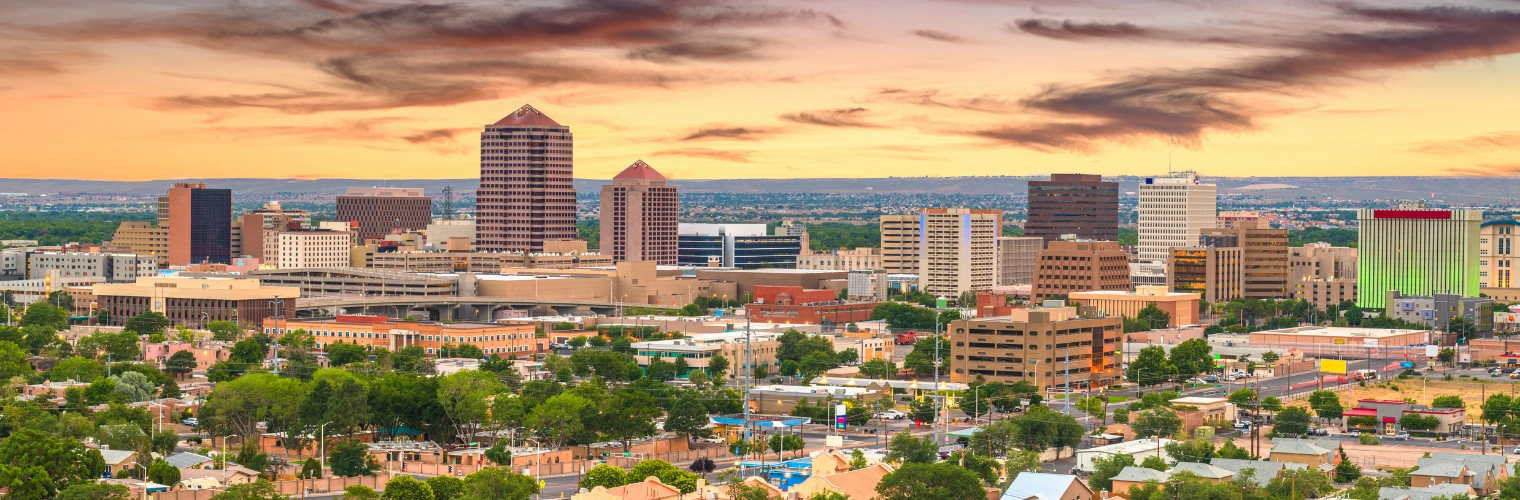
Albuquerque is the largest city in New Mexico. Over the past decade or so, the city has struggled with rising rates of substance abuse disorders, overdose deaths, and drug-related crime.
There is no doubt that drug misuse is a national issue, but unfortunately, Albuquerque ranks near the top when it comes to measures like per-capita overdose deaths and arrests related to controlled substances.
A closer look at a few statistics on substance abuse in New Mexico will highlight how bad the problem is currently.
- According to a report from New Mexico’s Health Indicator Data & Statistics, the state’s overdose death rate has more than tripled from 1990 to 2023.
- In Bernalillo County, where Albuquerque is located, there were more than 50 overdose deaths per 100,000 residents between 2019 and 2023.
- From a report by the Albuquerque Police Department, the number of drug/narcotic offenses was steadily climbing in 2025, ranging anywhere from 350 to more than 600 per month.
- DEA officials have highlighted the fentanyl crisis as the biggest drug threat in the city, as it is more than 100 times more potent than morphine.
- Seven out of ten fentanyl-laced fake prescription pills analyzed in 2023 contained a potentially lethal dose of at least 2 mg.
- New Mexico has the highest rate of unintentional drug-induced overdose deaths in the country, approximately double the national rate.
- And the proportion of youth overdosing from heroin in New Mexico has increased more than fivefold since 2004.
Two Core Factors Contributing to Substance Abuse in Albuquerque
So, we’ve established that substance abuse is a serious problem affecting the people of Albuquerque. Substance use disorders are all too common here, and they take a toll on both the individuals who are affected and the surrounding community.
But what is it about Albuquerque that has caused drug overdoses and related issues to become such a problem?
It starts with economic instability. There are areas within Albuquerque that struggle with poverty and unemployment, and as a direct result, substance abuse tends to be higher in those areas.
As drugs have become more and more readily available in recent years, the people who are struggling to find stable housing and build a sustainable life sometimes turn to drug abuse for an escape.
The Mental Health Factor
The drug crisis in Albuquerque has resulted in increased crime, homelessness, and a strain on community resources, including public safety services.
Mental health challenges also play a role. We have seen a rise in mental health conditions over recent years, and without easy access to programs from SAMHSA, the Substance Abuse and Mental Health Services Administration, and other similar organizations, it can be tough for the people of Albuquerque to seek treatment successfully.
The geographic isolation of New Mexico as a whole means it’s not always easy for people to get the help they require in a way that is practical and sustainable.
A Geographical Hot Spot for Trafficking
Speaking of geography, the location of New Mexico also makes it a prime location for drugs to flow through. Albuquerque specifically is located directly on I-40, which is a major west-east freeway in the southern half of the United States.
If people here are looking for drugs, whether they are prescription opioids or an illegal drug sold on the streets, those substances are rarely hard to find.
The Connection Between Drug Use and Crime Rates in Albuquerque
Drug abuse and addiction are already serious problems. When you add the related crime that occurs in that situation, however, things look even worse. New Mexico ranks high on crime rate lists in large part due to the drug crisis that exists in the state.
People struggling with substance abuse often have to turn to theft or drug sales to support their growing habit, and this is a downward cycle. What might start as relatively minor crimes can quickly advance into more and more dangerous and harmful activities. While local law enforcement tries to keep up with the pace of these crimes, it’s an uphill battle.
It is in this way that the drug problem in Albuquerque can affect everyone. Even those who don’t have a problem with drugs or alcohol can become victims, whether in the form of property crimes, domestic violence, or something else entirely. Community members in general can help by raising awareness of the crime risks in the city and encouraging the New Mexico Department of Health and other governmental organizations to take action on the matter.
Get Accredited Treatment Programs at Icarus – Call Now!
A Lack of Available Treatment Options Furthers the Problem
When looking in and around Albuquerque, it’s easy to see that there is a lack of suitable substance abuse treatment options in the area. This applies within Albuquerque itself and also in the more rural communities throughout New Mexico.
Treatment facilities are hard to find, and the ones that are available may be full. Treatment providers can help significantly in the battle against drug and alcohol abuse, but they are only helpful if people can get a spot and begin treatment when they need it most.
Many important treatment services need to come together to address addiction, but it often starts with a medical detox. Substance abuse treatment facilities that offer medical detox help patients break the pattern of addiction and get through the worst of their withdrawals in a safe and supportive environment.
Lasting Treatment is Critical to Success
Once detox is completed, clients can move into treatment programs, including inpatient and outpatient rehab options. These programs help build a foundation that can support sobriety, which will hopefully last a lifetime.
One person at a time, the Albuquerque drug problem could be improved through professional treatment, but at this time, the kinds of treatment required just aren’t readily available to much of the population.
Fortunately, as of 2026, the city is addressing its epidemic with a multi-tiered approach funded by approximately $150 million in opioid settlement funds.
Efforts to address the drug crisis in Albuquerque include developing culturally competent care and community-based solutions.
The Role of Community Organizations and a Collective Effort
With one of the worst drug use problems in the country, the people of Albuquerque aren’t going to get out of this issue and back on track alone.
Instead, it’s going to take a collective effort of organizations and businesses providing services that help keep people away from fentanyl, cocaine, and many other drugs. Recovery is not an individual effort but rather a group and community activity.
Local Community Initiatives in ABQ
It is encouraging to see the community rallying around this issue and bringing new initiatives to the fore that target specific issues that require support.
- Stigma surrounding substance use disorders is a significant barrier to treatment in New Mexico.
- Community advocacy groups have brought attention to the seriousness of the opioid problem in Albuquerque. This serves to lower stigma and increase awareness.
- The City of Albuquerque initiated a needs assessment to identify gaps in treatment availability for opioid users.
- Researchers at the University of New Mexico are implementing overdose prevention training programs to address substance use disorders in New Mexico.
- Community harm reduction strategies include overdose first aid training and Narcan administration techniques.
- Emergency overdose response strategies include distributing naloxone (Narcan) to community organizations and first responders.
- The overdose first aid program trained over 300 teens in Albuquerque, contributing to better community norms about overdose prevention.
Up To 100% of Rehab Costs Covered By Insurance – Call Now!
Get Detox and Treatment for All Forms of Substance Abuse Today
Don’t wait another day to reach out and take the first step toward turning your life around. If you are struggling with addiction, mental health challenges, or both, the Icarus Recovery Center team is here to serve you.
To make treatment as accessible as possible, we are proud to accept nearly all forms of New Mexico Medicaid, including Turquoise Care. Our team offers medical detox, in addition to mental health primary services, which are suitable for those who use alcohol and drugs as a form of self-medication.
We want to help put an end to the drug use, overdose deaths, and criminal activity that have become all too common in and around Albuquerque. It would be our honor to serve you and your family.
References and Resources
- Albuquerque Community Safety. (n.d.). Opioid Education & Prevention (OEP). City of Albuquerque.
- City of Albuquerque Police Department. (n.d.). Crime statistics. City of Albuquerque.
- Drug Enforcement Administration. (n.d.). Fentanyl (Fact sheet). U.S. Department of Justice.
- Drug Enforcement Administration. (n.d.). DEA laboratory testing reveals that 6 out of 10 fentanyl-laced fake prescription pills now contain a potentially lethal dose of fentanyl (Alert). U.S. Department of Justice.
- Local Government Coordinating Council. (2025, February 20). Joint opioid settlement implementation plan: Policy guidance for strategic implementation. City of Albuquerque and County of Bernalillo.
- Mayette, A. (2019, June 21). Alcohol-related deaths in New Mexico, 2013–2017. New Mexico Department of Health, Epidemiology and Response Division.
- New Mexico Department of Health. (n.d.). Drug overdose in New Mexico (Factsheet). Epidemiology and Response Division.
- New Mexico Health Indicator Data & Statistics (IBIS). (2025, September 17). Summary health indicator report: Drug overdose deaths. New Mexico Department of Health.
- New Mexico Legislature. (2022). Transforming behavioral health in New Mexico: A pathway toward hope and healing (Final report; hosted PDF).
- University of New Mexico Health Sciences Center Newsroom. (n.d.). UNM population health researchers address New Mexico’s substance use crisis. University of New Mexico.